As the New Year approaches, many individuals begin to reflect on their past accomplishments and set goals for the coming year. While personal resolutions can be motivating, maintaining consistency and achieving substantial progress often requires more than just self-motivation. Engaging with a professional life coach can be a transformative step towards realizing New Year aspirations, fostering sustainable personal and professional growth.
Understanding the Role of a Life Coach
A professional life coach is trained to help individuals identify their goals, overcome obstacles, and develop strategies to achieve personal and professional success (International Coaching Federation, 2021). Unlike therapists who focus on mental health issues, life coaches primarily concentrate on present circumstances and future ambitions, guiding clients through actionable steps to enhance their quality of life (Williams, 2017).
The Benefits of Starting the New Year with a Life Coach
- Clarity and Goal Setting: Life coaches assist clients in defining clear, realistic, and achievable goals. They use techniques such as SMARTS goal setting to ensure objectives are Specific, Measurable, Achievable, Resourced, Time Framed and you have clarity of the First Steps (Nutley, 2023).
- Accountability: A major challenge in achieving New Year resolutions is sustaining motivation. Life coaches provide ongoing support and accountability, ensuring clients remain focused and proactive (Grant, 2014).
- Overcoming Limiting Beliefs: Many individuals struggle with self-doubt and limiting beliefs that hinder progress. Life coaches employ cognitive-behavioral strategies to help clients challenge and replace negative thought patterns with empowering beliefs (Neenan & Dryden, 2013).
- Enhanced Productivity and Time Management: By identifying priorities and eliminating distractions, life coaches can help clients optimize their time and increase productivity (Locke & Latham, 2002).
- Work-Life Balance: A professional life coach can guide clients in establishing boundaries and achieving a healthier work-life balance, reducing stress and enhancing overall well-being (Green, Oades, & Grant, 2006).
Strategies Life Coaches Use to Drive Success
- Vision Planning: Coaches often encourage clients to create vision boards or engage in visualization techniques to solidify their goals (Gollwitzer, 1999).
- Behavioural Change Techniques: Implementing small, consistent habits leads to lasting change. Life coaches help design customized action plans to encourage positive behaviour shifts (Prochaska & DiClemente, 1983).
Choosing the Right Life Coach
Selecting a life coach who aligns with your values and goals is essential for a productive coaching relationship. It is advisable to verify their credentials, experience, and coaching approach. Certifications from recognized bodies such as the Association For Coaching or the International Coaching Federation (ICF) ensure a coach adheres to professional standards (ICF, 2021).
The start of a new year presents a unique opportunity for self-improvement and goal attainment. Partnering with a professional life coach can provide the structure, motivation, and accountability necessary to turn resolutions into reality. Through personalized strategies and continuous support, life coaching empowers individuals to unlock their potential and achieve lasting success.
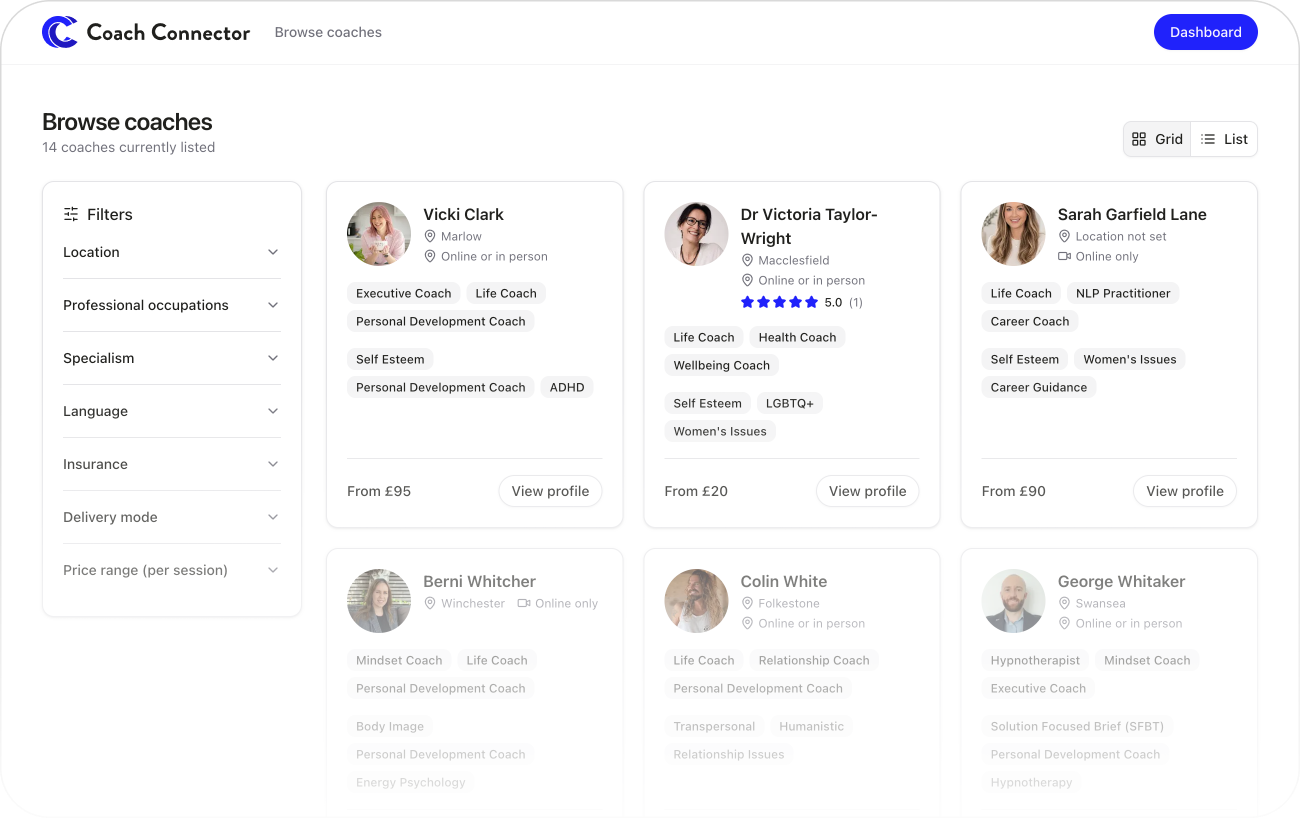
All listed professionals on the CoachFinder website are qualified, are members of a professional body and have appropriate insurance.
References
- Nutley, T. (2023). Why using your SMARTS is Better than just being SMART! The Journal of Personal Development. – UKCPD
- Dweck, C. S. (2006). Mindset: The new psychology of success. Random House.
- Gollwitzer, P. M. (1999). Implementation intentions: Strong effects of simple plans. American Psychologist, 54(7), 493-503.
- Grant, A. M. (2014). The efficacy of executive coaching in times of organizational change. Journal of Change Management, 14(2), 258-280.
- Green, L. S., Oades, L. G., & Grant, A. M. (2006). Cognitive-behavioral, solution-focused life coaching: Enhancing goal striving, well-being, and hope. The Journal of Positive Psychology, 1(3), 142-149.
- International Coaching Federation (ICF). (2021). ICF Professional Coaching Core Competencies. Retrieved from https://coachingfederation.org
- Locke, E. A., & Latham, G. P. (2002). Building a practically useful theory of goal setting and task motivation. American Psychologist, 57(9), 705-717.
- Neenan, M., & Dryden, W. (2013). Life coaching: A cognitive behavioural approach. Routledge.
- Prochaska, J. O., & DiClemente, C. C. (1983). Stages and processes of self-change of smoking: Toward an integrative model of change. Journal of Consulting and Clinical Psychology, 51(3), 390-395.
- Williams, P. (2017). Becoming a professional life coach: Lessons from the Institute for Life Coach Training. W. W. Norton & Company.Think BIG – the Jouyrnal of Personal Development